Colorado's Water Is Colorado's Future
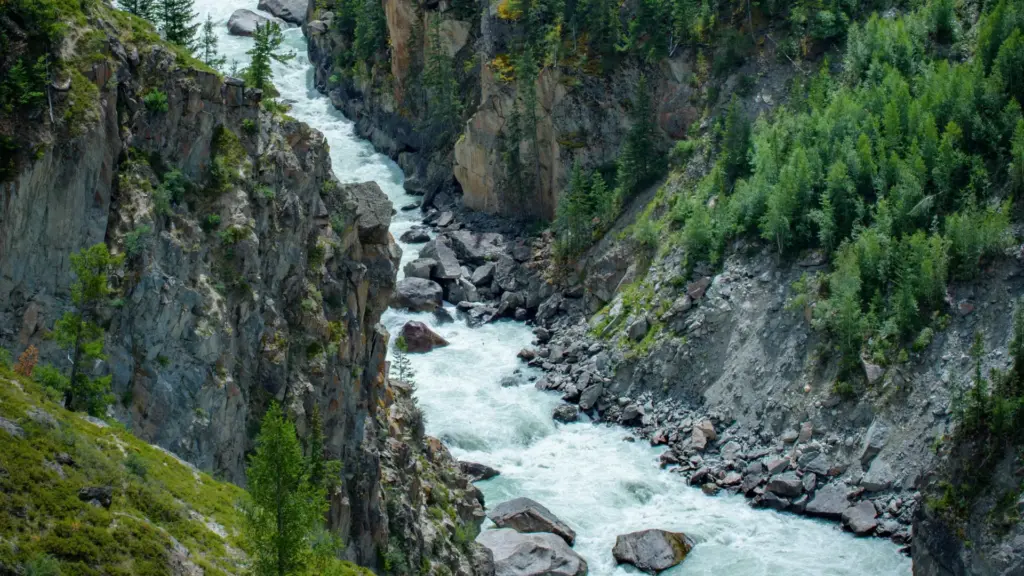
The 1922 Compact promised water this river never had. The 2007 Interim Guidelines expire December 31, 2026. Whoever wins this race takes office inheriting a crisis a century in the making. I will not blink.
OPENING — THE STAKES
Water is not an issue in Colorado. Water is everything in Colorado.
It is the snow that falls on the Western Slope and fills the Colorado River. It is the aquifer beneath the San Luis Valley that grows your vegetables. It is the reservoirs that feed Denver, Aurora, Colorado Springs, and the Front Range cities where 90% of Coloradans live. It is the irrigation ditch that has kept a family farm alive through four generations of drought. It is the tribal water right that the Southern Ute and Ute Mountain Ute nations fought for, won in court, and have never been fully honored.
The Colorado River Compact was signed in 1922. It promised to deliver water that — as Colorado State University climate scientist Brad Udall and every major hydrologist now confirms — this river never actually had. The Compact was written during one of the wettest decades in a millennium. We have been overdrawn ever since.
The 2007 Interim Guidelines — the rules that have governed shortage sharing between Upper and Lower Basin states for nearly twenty years — expire December 31, 2026. The federal government missed its February 2026 deadline for a new seven-state agreement. Arizona has hired lawyers and is preparing to take this to the Supreme Court. Utah is doing the same.
Colorado’s lead negotiator has said it plainly: “We are being asked to solve a problem we didn’t create with water we don’t have.” She is right.
As Governor I will fight for every drop of Colorado’s water — and I will fight smart, fight legally, and fight without flinching.
THE STATE OF THE CRISIS
- Colorado and the Upper Basin states (Utah, Wyoming, New Mexico) reached internal consensus on a post-2026 framework. The Lower Basin (California, Arizona, Nevada) rejected it.
- The Lower Basin has used more than its legal share of Colorado River water for decades. California alone has built an economy on allocations that exceed its legal entitlement under drought conditions.
- Colorado may be physically unable to meet its 10-year rolling average delivery obligation to the Lower Basin as early as 2027 — not because Colorado wasted water, but because the river is smaller than the 1922 Compact assumed, and the climate is warmer.
- The San Luis Valley’s confined aquifer — one of the largest in the Rocky Mountain West — is being drawn down faster than it can recharge, threatening the farms, towns, and communities that depend on it.
- AI data centers coming to Colorado bring enormous water consumption demands at exactly the moment the state can least afford new industrial draws.
- Tribal water rights in Colorado — including the Southern Ute Indian Tribe’s settled rights and the Ute Mountain Ute Tribe’s long-unquantified claims — remain incompletely honored a century after the Compact was signed.
- Western Slope communities, which are the source of the water that feeds the entire Front Range through trans-mountain diversions, have never been given a meaningful seat at the table when Front Range utilities negotiate new water projects.
MY PLAN — TWO LEAD PILLARS, FIVE COMMITMENTS
LEAD PILLAR 1: WESTERN SLOPE FIRST
Let me say something that most Front Range politicians will not say:
The Western Slope is where the water comes from. The Western Slope should be the first consideration in every water decision Colorado makes — not an afterthought.
The Gunnison. The Yampa. The White. The Dolores. The Uncompahgre. These rivers, and the communities, farms, ranches, and ecosystems they sustain, are the origin of Colorado water. Before one drop crosses the Continental Divide to serve a Front Range city — before one Trans-Mountain Diversion moves water from the Colorado River basin to the South Platte — the Western Slope’s needs must be assessed, respected, and protected.
As Governor I will:
- Establish a Western Slope Water Council with real statutory authority — not an advisory committee, not a stakeholder engagement process, but a body whose approval is required before any new state water infrastructure project affecting Western Slope basins moves forward.
- Maintain existing Trans-Mountain Diversions at their current legal levels. The Front Range depends on this water. Denver Water, Northern Water, Aurora Water, Colorado Springs Utilities — these systems serve millions of Coloradans. I will not disrupt that. But those existing diversions are the ceiling, not the floor. I oppose any new Trans-Mountain Diversion that would increase the draw on Western Slope rivers without the explicit consent of Western Slope communities.
- Fund Western Slope water infrastructure — storage, conveyance, efficiency — on par with Front Range investments, through a dedicated Western Slope Water Infrastructure Fund.
- Protect the Yampa, the Dolores, and the Thompson Divide from new energy and industrial water withdrawals that would permanently diminish flows.
Ensure Western Slope agricultural users are first in line for conservation incentive programs — because the farms on the Western Slope predate the cities on the Front Range.
LEAD PILLAR 2: TRIBAL WATER RIGHTS — HONOR WHAT WAS PROMISED
The Southern Ute Indian Tribe and the Ute Mountain Ute Tribe have been in Colorado longer than the state of Colorado has existed. Their water rights — reserved under the Winters Doctrine, adjudicated in federal and state courts over decades — predate virtually every other water right on Colorado’s rivers.
And yet those rights remain incompletely honored. Underfunded. Under-delivered. Treated as a legal technicality rather than a moral obligation.
As Governor I will:
- Make full tribal water rights delivery a Day One executive priority — directing the Colorado Water Conservation Board and the CWCB’s Interstate Compact Compliance program to ensure tribal allocations are quantified, protected, and delivered.
- Fund tribal water infrastructure — the storage, conveyance, and treatment systems that allow tribal nations to actually use the water rights they hold on paper.
- Include tribal nations as sovereign co-negotiators in Colorado’s Colorado River Compact negotiations — not observers, not stakeholders, but co-equal sovereign voices.
- Conduct a full audit of Southern Ute and Ute Mountain Ute water right delivery within the first 90 days of my administration, with findings made public and a remediation timeline attached.
- Extend this framework to other tribal nations with Colorado River basin interests, including the Navajo Nation, whose rights affect how much water reaches the Lower Basin.
You cannot call yourself a water-rights state and selectively honor some rights while ignoring others. Either the law means something or it doesn’t.
COMMITMENT 3: PROTECT COLORADO AGRICULTURE — NO FORCED FALLOWING
Colorado agriculture is not the cause of the Colorado River crisis. The cause is a century of Compact over-allocation, Lower Basin overuse, and a warming climate that has shrunk the river.
I will not use Colorado farmers as the bill-payer for problems they did not create.
- I oppose mandatory fallowing of Colorado farmland as a water management tool — period. No Colorado farmer should be told by the state or the federal government that their fields must go dry to cover for Arizona’s or California’s overuse.
- I oppose any “demand management” program that is coercive, underpaid, or that threatens the long-term viability of Colorado’s agricultural economy.
- I support voluntary, fairly compensated conservation programs where farmers choose to participate on their own terms — but the moment participation stops being voluntary, I stop supporting it.
- I will direct the Colorado Water Conservation Board to model and publicly release the cost to Colorado agriculture of every proposed Lower Basin demand management scenario — so Coloradans know exactly what is being asked of our farmers before any agreement is signed.
- I will establish an Agricultural Water Security Ombudsman within CDPHE to advocate for farming and ranching communities in every water negotiation and rulemaking that affects their rights.
The Eastern Plains, the San Luis Valley, the Uncompahgre Valley, the Grand Valley — these farming communities are Colorado. Any water deal that devastates them is a bad deal, and I will not sign it.
COMMITMENT 4: LITIGATION READINESS — COLORADO WILL NOT BE BULLIED
Arizona has lawyers. Utah has lawyers. The Lower Basin states are preparing for Supreme Court litigation over Colorado River allocations.
Colorado will not be caught flat-footed.
As Governor I will:
- On Day One, direct the Colorado Attorney General to assemble a Colorado River litigation task force — the best water-law minds in the country — and put them on retainer. Colorado will be ready to litigate the moment litigation becomes necessary.
- Assert Colorado’s full legal rights under the 1922 Compact and the Law of the River — including the prior appropriation doctrine, the Upper Basin Compact of 1948, and the Colorado River Storage Project Act.
- Coordinate with Utah, Wyoming, and New Mexico to present a unified Upper Basin legal front. The Lower Basin should not be able to pick off Upper Basin states one at a time in settlement negotiations or court.
- Make clear to the Bureau of Reclamation and the federal government that Colorado will challenge any post-2026 Compact renegotiation that requires Upper Basin states to absorb disproportionate cuts without equivalent Lower Basin reductions.
- Be honest with Coloradans about what litigation means — it is expensive, slow, and uncertain. Negotiation is always preferable. But negotiation from weakness invites exploitation. Colorado will negotiate from strength — and if the other side won’t come to the table honestly, we will see them in court.
Colorado will not be bullied. Not by California. Not by Arizona. Not by the federal government.
COMMITMENT 5: CONSERVATION, TECHNOLOGY & THE FUTURE
Protecting Colorado’s water rights does not mean wasting water. Conservation is not a concession — it is a strategic advantage.
As Governor I will:
- Set a statewide goal of 10% municipal water use reduction by 2035 through tiered pricing, efficiency incentives, and building code upgrades — with state funding to make this achievable for small rural utilities, not just Denver Water.
- Regulate AI data center and industrial water consumption — any new large-scale industrial water user in Colorado must offset 100% of their new consumptive use before a permit is issued.
- Invest in water recycling and reuse infrastructure on the Front Range, where treated wastewater currently flows downstream to the Lower Basin and is counted against Colorado’s delivery obligations.
- Fund aquifer recharge programs in the San Luis Valley and the Republican River basin to reverse decades of overdraft.
- Support the Drought Contingency Plan successor framework — but only if it treats all seven states equitably, enforces Lower Basin reductions proportional to Upper Basin reductions, and does not require Colorado farmers to bear a disproportionate share of the cut.
- Modernize Colorado’s water data infrastructure — real-time stream gauging, aquifer monitoring, snowpack reporting, and demand tracking, publicly available, so every Coloradan can see the state of their water.
The 1922 Compact is a fiction held together by a century of legal inertia and political cowardice. At some point — soon — the math runs out. The river cannot deliver what the paper promises.
Colorado did not cause this. Colorado’s farmers did not cause this. The Western Slope did not cause this. The tribal nations who were here before the Compact was signed certainly did not cause this.
But Colorado is going to have to fight to make sure we are not the ones who pay for it.
As Governor I will fight for every drop. I will honor every water right — including the tribal water rights that have been honored last for too long. I will protect every farm. I will tell the truth about what this river can and cannot provide.
And I will not blink. – Erik Underwood for Governor